
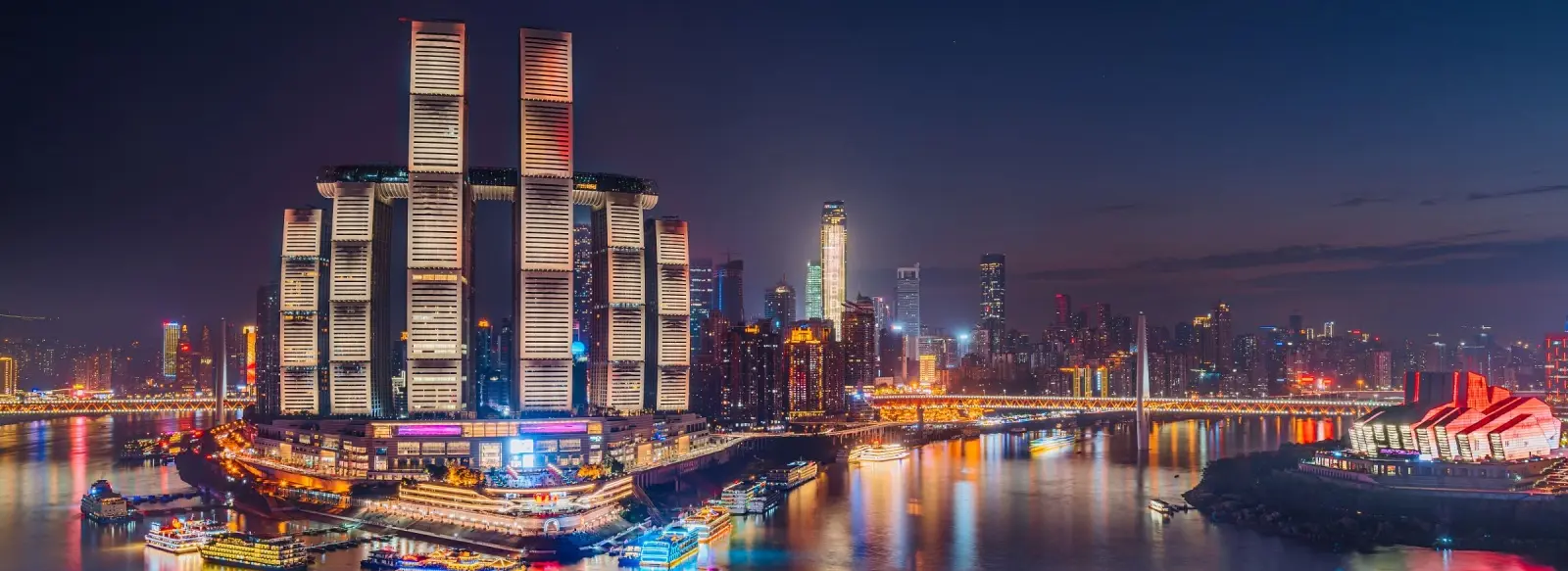
Explore Chongqing, China — Your Complete Mountain City Travel Guide
A city where the ground floor opens onto the 22nd storey, a train runs through a building, and two rivers split the skyline in half. Here is how to plan a trip that fits the way Chongqing actually works.
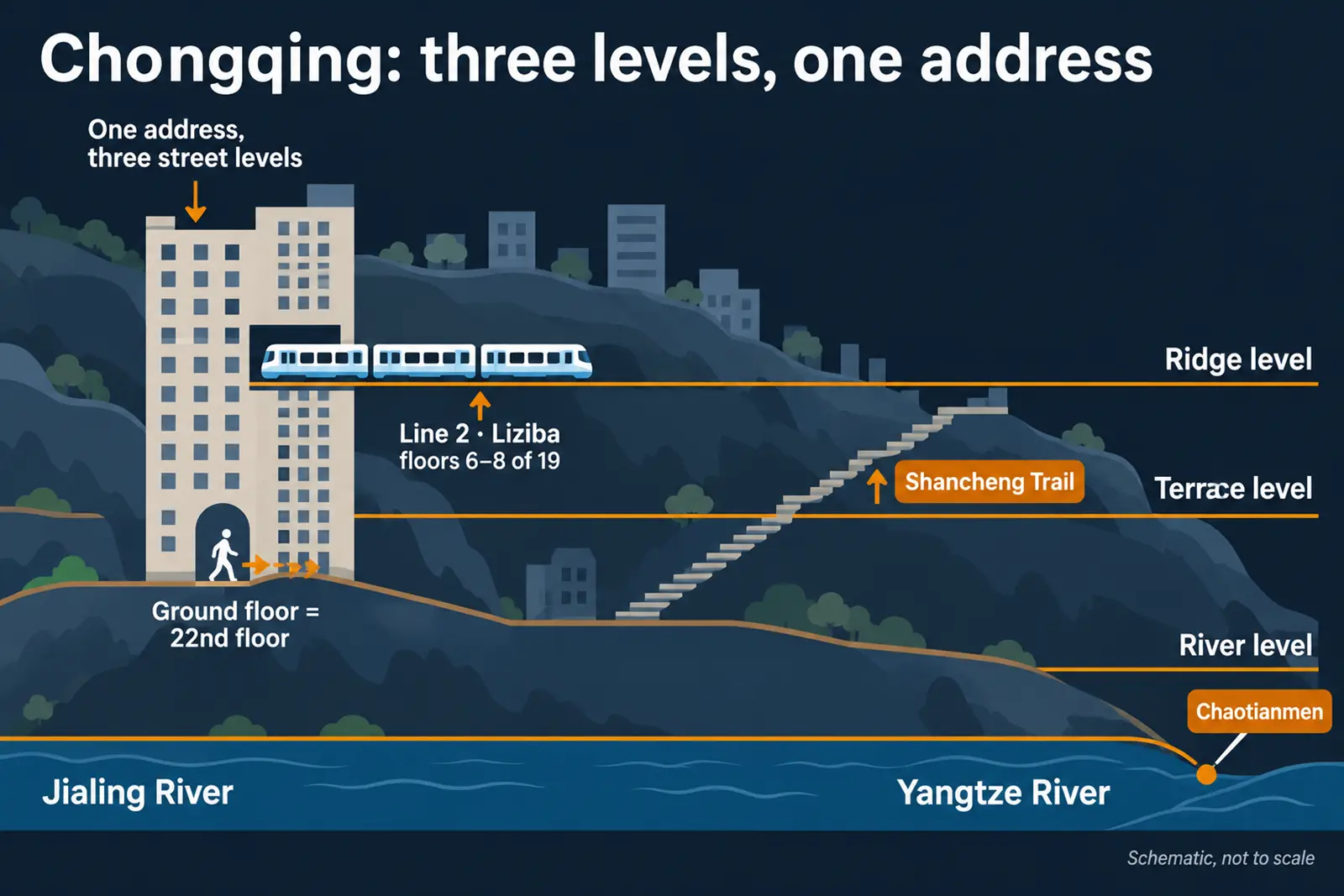
Chongqing China is not a city you can read from a map. Streets stack on top of streets, and the ground floor on one side is the 22nd floor on the other. If this is your first time planning a Chongqing travel route, the smart move is to stop treating it like a normal city break and start thinking in levels.
This Chongqing travel guide is built around that idea. It gives you the short version first: what this mountain city China built on ridges actually is, which neighbourhoods sit at which height, and how many days the place deserves. Then it sends you straight to the detailed guide you need. The Chongqing city centre alone has three levels that most visitors never notice. Everything here was put together on the ground, not copied from a press release. Chongqing tourism has grown fast since the city went viral, and much of what you read online is out of date, over-posed, or simply wrong about which exit to take.
If you are still deciding whether to travel to Chongqing at all, here is the honest answer: three nights, not three hours.
Use this page as a hub. Pick your trip type below, follow one link, and you will land on a guide that answers the question you actually have. Whether you visit Chongqing, China for three days or three hours, the order of things matters more than the list of things.
Three ways people travel to Chongqing
Most readers land on this page with one of three plans. Pick yours and skip the rest of the research.
Three or four days, classic circuit
Hongya Cave, the rivers, the old lanes, one day trip. Enough time to feel the vertical city without racing it.
Get the 4-day itinerary →Here for hot pot and noodles
Chongqing eats late and eats hard. Build the day around one proper hot pot, one noodle breakfast and a market walk.
Open the food and cuisine guide →Eight hours between flights
Drop the bags at the metro, ride Line 10 downtown, keep the loop tight and leave a buffer for the return.
Plan a short city loop →What this Chongqing travel guide covers
Every section below is a full guide of its own. Start with the one that matches your next decision.
Things to do in Chongqing
Sights, viewpoints, river crossings and the neighbourhoods worth walking slowly.
Chongqing cuisine and food
What to order, how hot it really is, and how to eat hot pot without embarrassing yourself.
Chongqing hotels
Which area to book, what the view is worth, and why “city centre” means three different things here.
Plan a Chongqing trip
Days, budget, season and sequence. The four decisions that shape everything else.
Chongqing transport and maps
Metro, monorail, cable cars and the exits that save you a 20-minute climb.
Chongqing weather
Fog, heat, rain and the two windows of the year when the city feels kind.
Why Chongqing China is a mountain city
Five things explain almost every photo you have seen of Chongqing. Learn them and the city stops being confusing. Chongqing, China did not set out to become a viral city — it simply kept building wherever the ground allowed.
1. The 8D layout
Chongqing China grew upward instead of outward because there was nowhere else to go. The city is built on ridges between two rivers, so roads cross over rooftops, and a shop entrance on one street is a fifth-floor window on the next. Locals call it 8D; planners call it a multi-level city. Both mean the same thing: your map is flat and the ground is not.
2. A train through a building
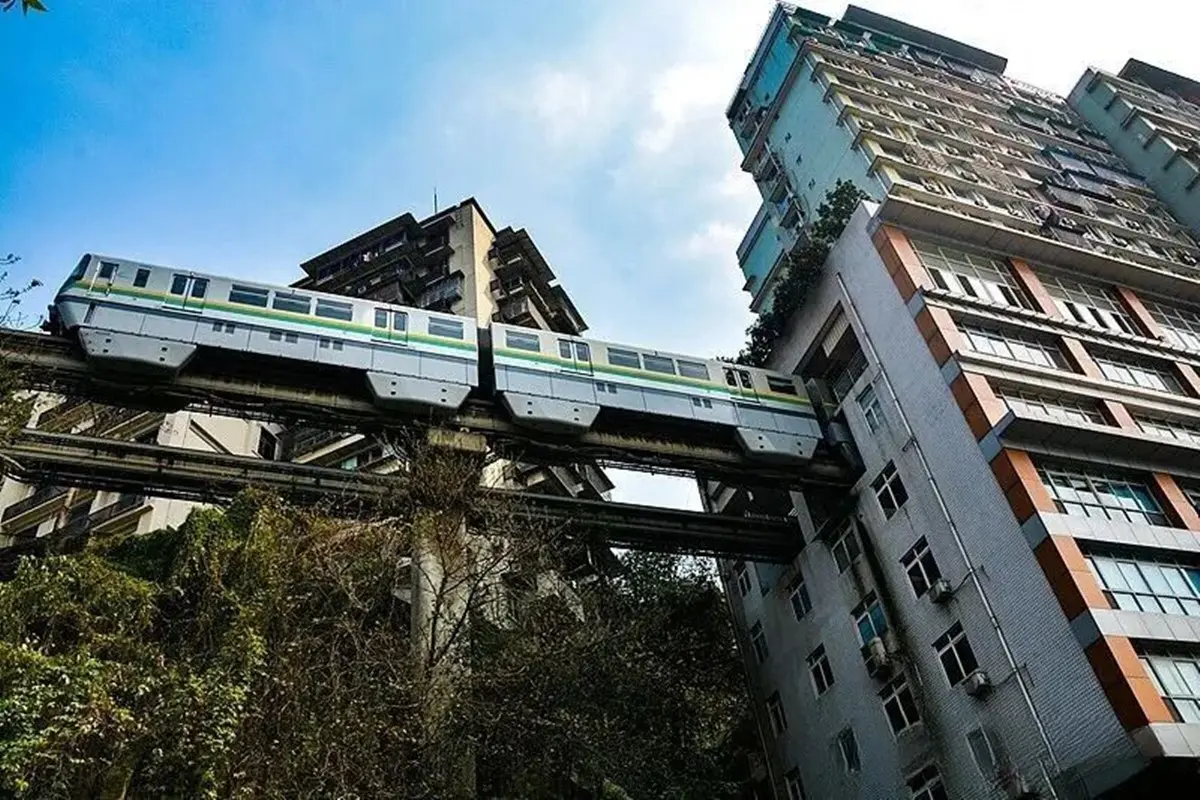
Line 2 of the metro runs straight through a 19-storey residential block at Liziba. The station was designed around the building, not the other way round. Stand on the street below at platform level and you can watch the train appear out of a wall. It is free, it takes ninety seconds, and it never gets old.
3. Hot pot as a civic religion
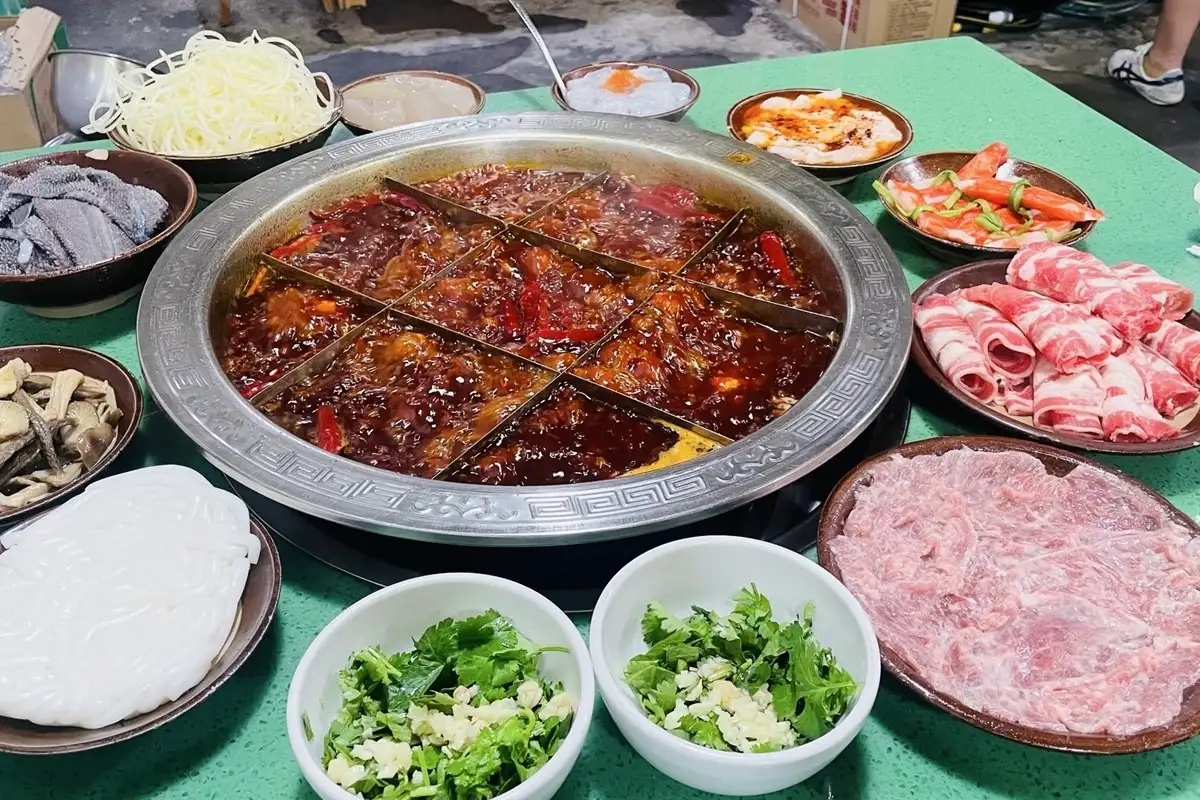
Chongqing hot pot is beef tallow, dried chilli and Sichuan pepper boiled in a divided metal pot, and it is eaten late, loudly and in company. The heat is not a test of courage; it is the point. Ask for 微辣 (mild) and you will still sweat. Order a plate of tripe, a plate of potato slices and a bowl of garlic oil, and you have the local formula. Our Chongqing hot pot guide covers the broth styles, the ordering phrases and the spots that regulars actually use.
4. Hongya Cave after dark
Eleven storeys of stilt-style buildings stacked against the cliff, lit gold from 18:30 and at their best from 19:30 until the lights dim around 23:00. Entry is free with a WeChat mini-program reservation. Go early in the evening, look at it from across the road on Qiansimen Bridge, then walk down to the river level. The queues are not free of time.
5. Old lanes in the middle of the towers
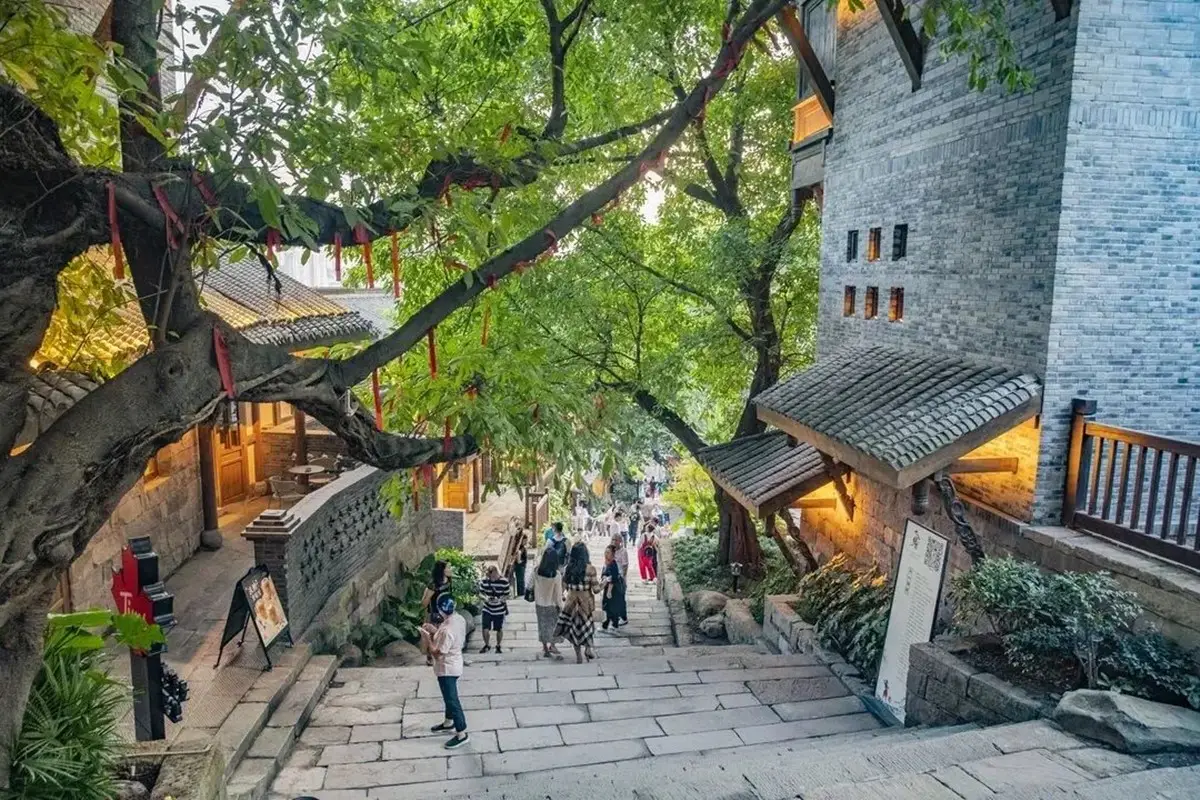
Two very different versions of old Chongqing survive side by side. Shibati is a rebuilt stair district with five zones and a wartime tunnel memorial. Ciqikou is a lived-in old port town with tea houses and snack stalls. One shows you how the city was rebuilt; the other shows you how it still lives.
The essential Chongqing sights, in order
One line each, no padding — the mountain city China is known for, ranked by what is worth your morning.
- Hongya Cave — the cliff of lanterns; go at dusk from the bridge opposite.
- Liziba Station — watch Line 2 pass through the apartment block.
- Chaotianmen — the point where the two rivers meet, one green, one brown.
- Mountain city walkways — stair routes that explain the whole city in two hours.
- Shibati (18 Steps) — five rebuilt zones on a 400-metre, 200-plus-step stairway.
- Ciqikou Ancient Town — old port, tea houses, and a crowd on weekends.
- Jiefangbei — the pedestrian core, best after dark when the tower and the malls light up.
- Three Gorges Museum — free, air-conditioned, and the fastest way into the region’s history.
- Dazu Rock Carvings — a UNESCO day trip, carved between the 9th and 13th centuries.
- The skyline at night — where to stand, and when the lights actually come on.
Four decisions to make first
Visa, season, budget, days. Everything else follows from these four, so settle them in this order. Chongqing tourism is concentrated on the Yuzhong peninsula, but these four decisions decide how much of the rest of the municipality you actually see.
Can you get in?
Roughly 50 countries — the UK, France, Germany, Italy, Spain, Australia, New Zealand, Japan and South Korea among them — enter China visa-free for up to 30 days. Not on the list? A pure holiday needs a tourist (L) visa, unless you qualify for the 240-hour transit rule. Lists change, so check before you book flights.
Visa and entry questions →When should you go?
March to May and September to November are the honest answers. Chongqing city summers are a 38°C sauna. Winter is grey, foggy and cheap, and the hot pot tastes better for it.
Month-by-month timing →What will it cost?
Chongqing is one of the cheaper big cities in China for food and transport, and one of the more expensive for hotel views. Budget by neighbourhood, not by city.
Real cost breakdown →How long do you need?
Three nights covers the peninsula and one big sight a day. Four lets you keep the south bank and Nanshan for a proper finale instead of squeezing them in.
Days needed, explained →What four days in Chongqing look like
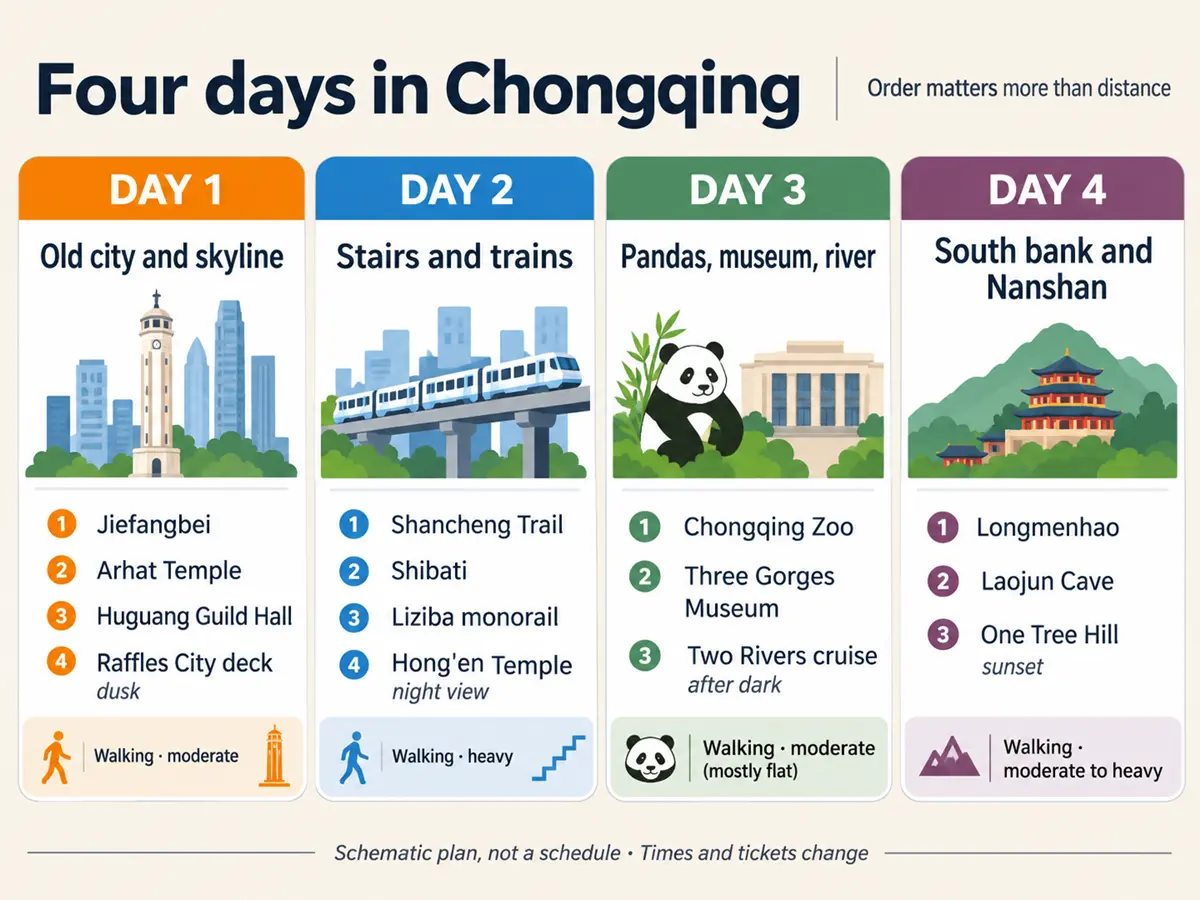
A skeleton, not a schedule — this is the Chongqing travel sequence we suggest, so move the days around the weather and your appetite.
- Day 1 · Old city and skylineJiefangbei, Arhat Temple and Huguang Guild Hall, then Raffles City’s observation deck at dusk.
- Day 2 · Stairs and trainsShancheng Trail, Shibati, the Liziba monorail, then Hong’en Temple for the night view.
- Day 3 · Pandas, museum, riverChongqing Zoo in the morning, Three Gorges Museum in the afternoon, a two-rivers cruise after dark.
- Day 4 · South bank and NanshanLongmenhao old lanes, Laojun Cave, then One Tree Hill for the last panorama.
See the full 4-day Chongqing itinerary, or stretch it with the 7-day version if you are adding Wulong or the Three Gorges.
Stuck on one decision? Tell us your dates and how many nights you have — we will tell you honestly whether Chongqing fits, and what to cut.
Ask Ke Ping a question →Chongqing travel questions, answered
Is Chongqing worth visiting?
Yes, if you want a city that feels unlike anywhere else in China. Chongqing China is not a museum city — it is loud, steep, humid and alive. The combination of vertical streets, river views and serious food is hard to match. It is less worthwhile if you only have one full day and want temples and quiet courtyards; this city rewards two or three nights and a pair of good shoes.
How many days do you need in Chongqing?
Three to four days is the sweet spot. Our four-day route stays inside the city: Jiefangbei and the guild halls, the Shancheng Trail and Shibati, the zoo and Three Gorges Museum, then the south bank. Dazu or Wulong needs a fourth or fifth day on top of that — it is not a half-day add-on.
Is Chongqing safe for foreign tourists?
Generally yes. Violent crime against visitors is rare, the metro is busy and well lit late, and English signage exists at major stations. The real risks are traffic, slippery stone steps in the rain, and dehydration from hot pot and humidity.
When is the best time to visit Chongqing?
Late March to May, and September to early November. Expect roughly 15–26°C, less rain and clearer river views. July and August regularly pass 38°C, and December to February brings fog that is atmospheric but hides the skyline.
How do you get from the airport to downtown?
Line 10 runs from Jiangbei Airport to the city centre in about 40 minutes; allow 50–60 if you are continuing to Jiefangbei. Taxis take roughly the same in light traffic. Details on exits, fares and late arrivals are in our Chongqing airport guide.
Do I need a visa to visit Chongqing?
It depends on your passport. Travellers from roughly 50 countries — the UK, France, Germany, Italy, Spain, Australia, New Zealand, Japan and South Korea among them — can enter China visa-free for up to 30 days. Everyone else, including US passport holders, needs a tourist (L) visa for a pure holiday.
Two exceptions matter. The 240-hour (10-day) transit rule covers a separate list of nationalities, the United States included, but only with an onward ticket to a third country or region and a genuine transit. Hainan Province runs its own 30-day visa-free scheme, US passports included, but it only covers Hainan — it will not get you to Chongqing. Country lists change often, so check the latest policy notices from China’s National Immigration Administration before you book.
More Chongqing guides
The guides that answer the next question, grouped by the decision you are about to make.
Plan
Move and weather
Tell us your dates. We will shape the route.
Send your arrival day, how many nights you have and whether you want the food or the mountains first. You will get a plan built around the way Chongqing actually moves.